Lessons/Programmatic 101/Lesson 4
Vol. I, No. 4 · Programmatic 101
Waterfall vs. header bidding
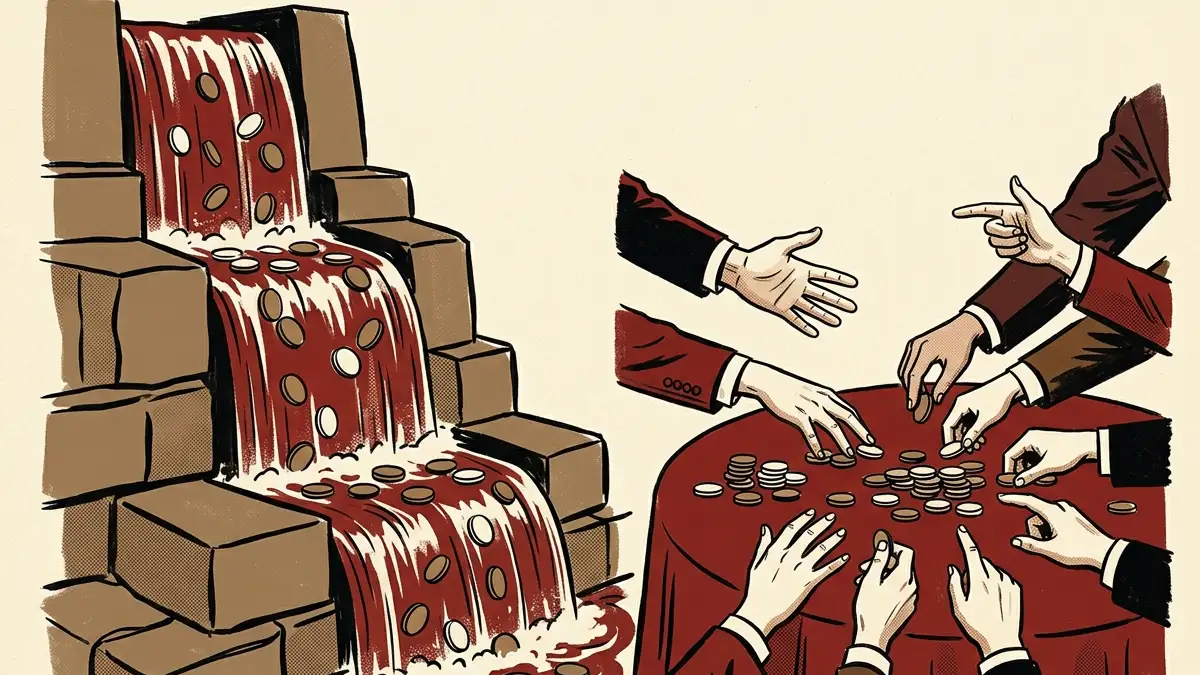
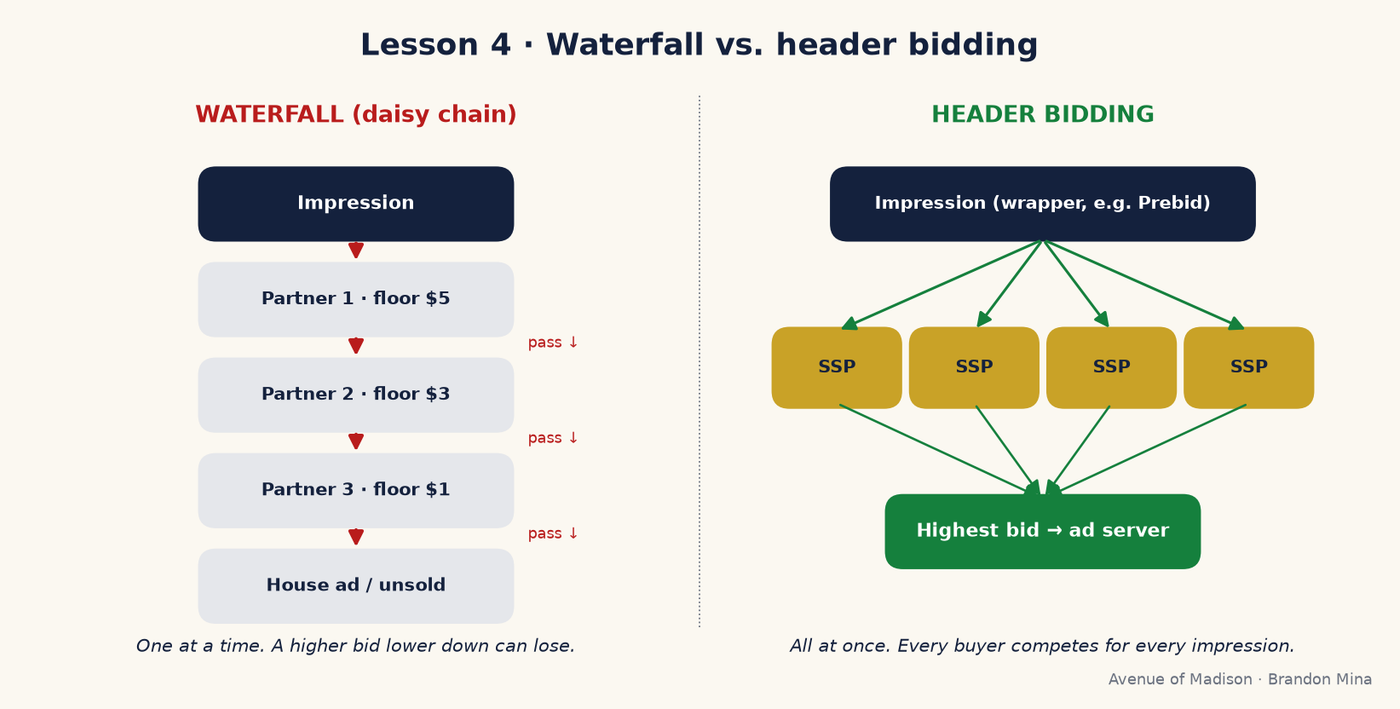
For years, publishers offered each impression to partners one at a time, in a fixed order.
By Brandon Mina·CEO, BrandPilot AI·Updated November 2026
Lesson 4 of 9
SyllabusAll 9 lessons
Programmatic 101 · course overview- 01The life of a programmatic impression
- 02Buy side vs. sell side: who sits where
- 03Auctions: first price, second price, and floors
- 04Waterfall vs. header bidding
- 05The four ways to buy programmatically
- 06How data and identity reach a bid
- 07Supply path optimization and supply chain quality
- 08Measuring programmatic: from impression to incremental outcome
- 09Where programmatic is going
Learning objectives
By the end of this lesson, you can:
- Describe how a waterfall works and why it left money on the table.
- Explain how header bidding lets every buyer compete at once.
- Compare client-side and server-side header bidding.
The lesson
A buyer further down the chain who would have paid more never got the chance. Header bidding changed that by asking many demand sources at the same moment and passing the best bid to the ad server. It's the single biggest structural shift in the sell side, and it explains why publishers work with so many SSPs today.
Compare waterfall and header bidding →Header bidding changed that by asking many demand sources at the same moment and passing the best bid to the ad server.
Lesson 04 · Waterfall vs. header bidding
What's the Big Idea? Key takeaways
- A waterfall offers impressions to one partner at a time and can miss higher bids.
- Header bidding lets many buyers compete at once.
- Server-side header bidding trades some transparency for speed.